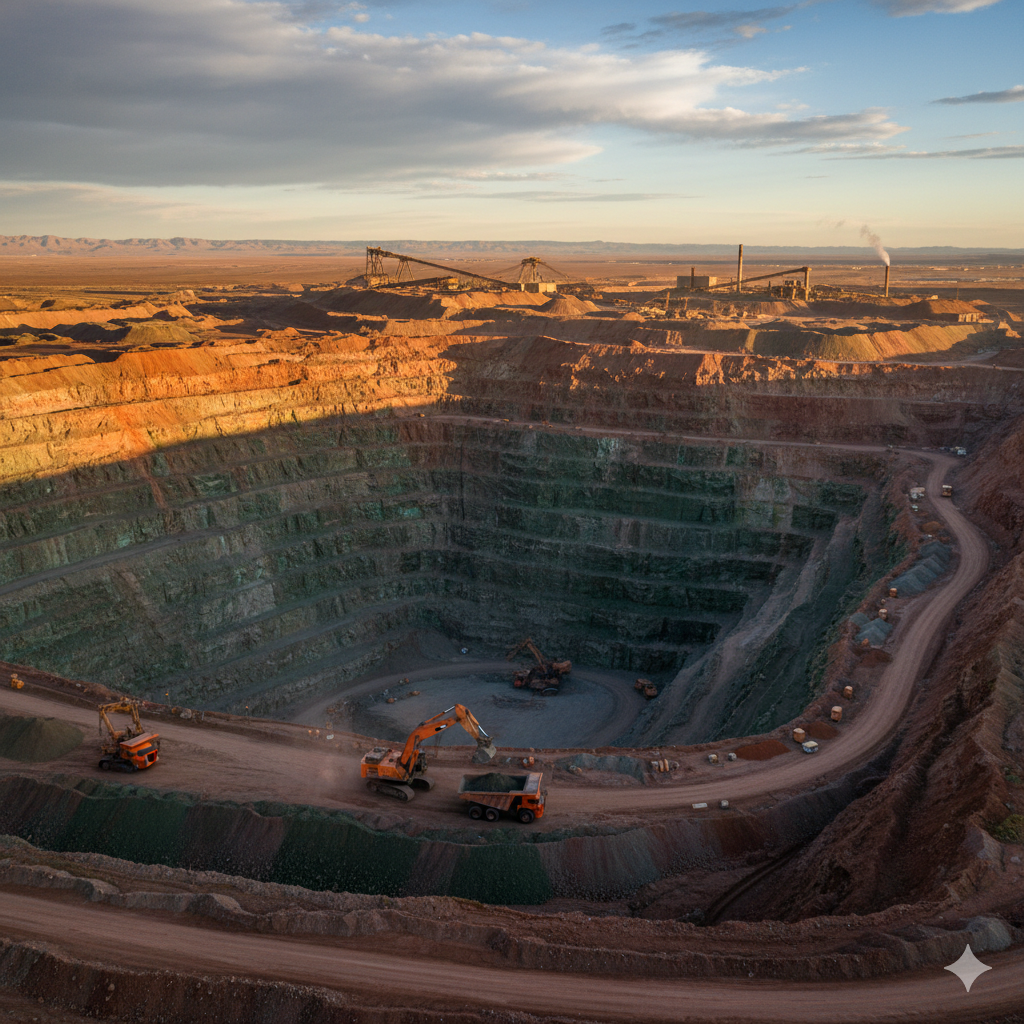
You’ll find Michigan’s mining story spans from Copper Country boomtowns to modern operations producing nickel, copper, iron, and industrial minerals that supply construction, manufacturing, and emerging clean‑energy technologies. Michigan still hosts active mines and extensive historical sites, and understanding where resources, regulations, and local economies intersect tells you how mining shapes the state today and tomorrow.
Explore how geology concentrates valuable minerals across the Upper Peninsula and other regions, where legacy mines and new projects coexist with environmental rules and community expectations. The article Mining in Michigan maps mineral resources, key sites, legal safeguards, economic impacts, and the practical prospects that matter if you want a clear picture of mining in Michigan.
Geological Resources and Mining Sites
Michigan hosts substantial deposits of iron, copper, nickel, and aggregate materials, plus smaller but important quantities of limestone, gypsum, and industrial minerals. You will find these resources concentrated in distinct geologic belts and historic districts that shaped local economies and infrastructure.
Major Minerals Mined in Michigan
You will encounter four primary mineral groups in Michigan: iron ore, native copper, nickel (as sulfide concentrates), and industrial aggregates. The Marquette Iron Range and Menominee Range supplied high-grade hematite and magnetite that fueled steelmaking for over a century.
Native copper occurs almost exclusively in the Keweenaw Peninsula, where large, often-sheetlike copper masses were mined without smelting for early industry.
Nickel and copper sulfide concentrates appear in parts of the Upper Peninsula and were historically recovered as byproducts of copper mining; modern recoverable content varies by deposit.
Limestone, sand, and gravel provide construction materials statewide, while smaller operations extract gypsum and specialty industrial minerals used in agriculture and manufacturing.
Notable Mining Regions
The Upper Peninsula contains the most significant metallic mining districts you will visit. The Keweenaw Peninsula is notable for its native copper lode systems and historic underground workings.
Marquette, Menominee, and Ishpeming areas form the iron ranges with open-pit and underground mines, rail links, and port facilities on Lake Superior.
Southern Lower Michigan and coastal dune areas host sand and gravel extraction sites supporting construction and shoreline management.
You will also find mapping and geologic data resources from the Michigan Geological Survey that document these regions, available through the state’s data hub for planning or research.
Historic and Present-Day Mines
Historic sites you can study include the Calumet & Hecla and Copper Range operations in the Keweenaw, which produced massive native copper outputs in the 19th and early 20th centuries.
Iron mining yields at places like the Tilden and Empire mines sustained regional employment and shipped concentrate from Lake Superior ports; some operations remain active while others are reclaimed.
Modern projects focus on reclamation and regulatory compliance; state agencies oversee transportation, storage, waste rock management, and reclamation planning.
You will also encounter small-scale and proposed exploration sites throughout the Upper Peninsula where development status ranges from drilled prospects to permitted operations.
Regulations, Economic Impact, and Future Prospects
Mining in Michigan is governed by permitting, reclamation, and environmental controls while contributing jobs, supply-chain activity, and tax revenue. New projects emphasize critical battery metals and tighter water and land protections, shifting industry priorities toward lower-impact extraction and reuse.
State and Federal Mining Regulations
You must obtain both federal and state permits before beginning most mining activities in Michigan. Key federal permits typically address wetlands (Clean Water Act Section 404) and air emissions (Clean Air Act), while state agencies enforce mining-specific reclamation plans, water-quality protections, and transport/storage rules.
The Michigan Geologic Resources Management Division and other state departments require a reclamation plan, financial assurance, and monitoring for erosion, tailings, and groundwater. Local ordinances and public comment periods can affect timelines. Noncompliance can trigger fines, permit revocation, and mandated remediation.
Practical checklist:
- Submit environmental impact studies and wetland delineations.
- Provide financial assurance for reclamation.
- Meet groundwater monitoring and reporting schedules.
- Engage with tribal governments and local stakeholders early.
Economic Contributions to Michigan
You benefit from mining through jobs, regional payroll, and supplier contracts concentrated in the Upper Peninsula. Active operations and exploration for nickel, copper, and other critical minerals create employment in extraction, processing, and local services.
State and local tax revenues plus royalties fund infrastructure and public services in mining counties. Indirect impacts include demand for trucking, equipment maintenance, and geological services. Legacy mine sites also influence local economies via reclamation projects and tourism that hinges on environmental restoration.
Quick facts:
- Employment: direct mining jobs plus broader supply-chain roles.
- Revenue: state/local taxes and fees tied to permits and production.
- Regional focus: Upper Peninsula dominates metallic mineral activity.
Emerging Technologies and Sustainability Initiatives
You will see increased use of technologies that reduce water use, limit tailings footprints, and improve ore recovery. Innovations include dry-stacked tailings, enhanced groundwater monitoring with real-time sensors, and electrified equipment to lower on-site emissions.
Companies and regulators are promoting stricter reclamation standards and adaptive management plans that require progressive restoration as mining advances. Battery-metal projects emphasize lifecycle planning: minimizing sulfuric acid generation, avoiding high-risk waste rock placement, and planning for post-closure land uses such as recreation or habitat.
Examples of practices:
- Dry stacking and paste backfill to reduce tailings ponds.
- Real-time groundwater and seepage monitoring networks.
- Electrification of haul trucks and increased on-site processing to lower transport emissions.