
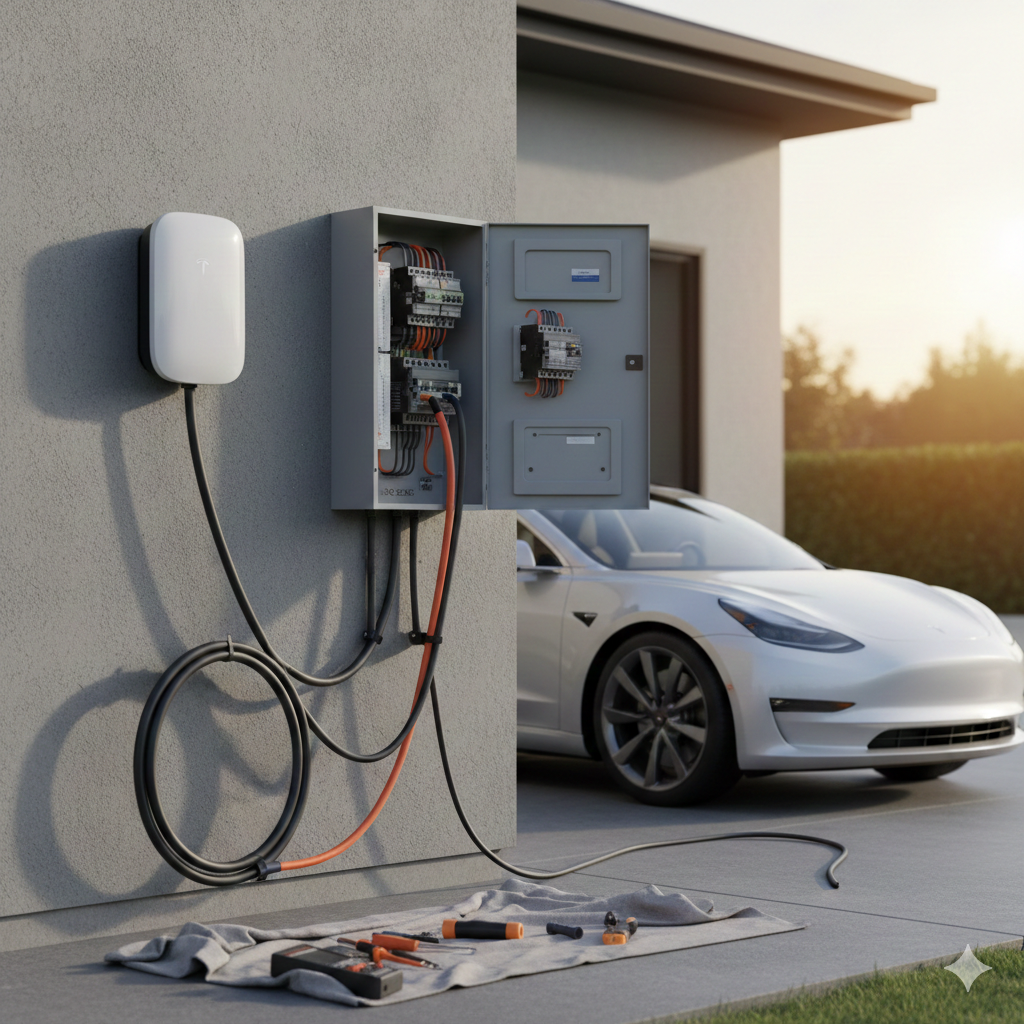
Looking for “ev charger installation near me” means you want fast, safe charging at home or at your property. You can find qualified local installers who assess your electrical panel, recommend the right Level 2 or fast-charging equipment, and handle permits and safe installation so your EV charges reliably and without overloading circuits.
This article ev Charger Installation guides you through what charger types do, how installers evaluate your home, and how to pick a certified pro who follows local utility and permit requirements. Expect practical tips on cost factors, timeline, and questions to ask installers so you get a dependable setup that fits your daily routine.
Understanding EV Charger Types
You’ll decide between slower, low-cost options for overnight charging and faster, higher-cost units for quick top-ups. Important differences include connector type, installation complexity, charging speed, and typical costs.
Level 1 vs. Level 2 Charging
Level 1 (120V AC) uses a standard household outlet and typically delivers about 2–5 miles of range per hour. It requires no special electrical upgrade, so you can start charging immediately, making it practical if you drive under ~30 miles daily. Expect very slow replenishment for long-range EVs; overnight charging may not fully recharge larger batteries.
Level 2 (240V AC) requires a dedicated circuit and a professionally installed EVSE (charger). It delivers roughly 10–60 miles of range per hour depending on the vehicle and charger amperage (commonly 16–40A residential). Installation costs vary—usually $500–$2,000+ including wiring, panel upgrades, and permitting. Level 2 is the most common home choice for reliable daily charging and shorter weekend turnarounds.
Key trade-offs:
- Level 1: minimal cost, minimal power.
- Level 2: higher upfront cost, much faster charge, often eligible for rebates.
DC Fast Charging Overview
DC fast chargers (often called Level 3 or DCFC) deliver high-power DC directly to the battery, typically 50 kW to 350 kW, enabling 80% charge in 20–60 minutes for many vehicles. These units use CCS, CHAdeMO, or Tesla connectors (with adapters) and are mainly installed in commercial locations, highway corridors, and public charging hubs.
You cannot usually install DC fast chargers at a typical home because they require three-phase power, large electrical service, and significant site infrastructure. Costs run from tens to hundreds of thousands of dollars plus ongoing demand charges and maintenance. DC fast charging makes sense for fleet depots, public stations, or users who frequently need long-distance, rapid top-ups rather than overnight charging.
Selecting Qualified EV Charger Installers
You need installers who meet code, hold relevant certifications, and assess your site’s electrical capacity and parking layout. Prioritize licensed electricians with EV-specific training and a written site assessment that outlines necessary upgrades and costs.
Licensing and Certification Requirements
Verify the electrician holds a current state or provincial electrical license and is insured for residential or commercial work. Ask for license number and insurance limits; confirm both with the issuing authority or insurer.
Look for EV-specific certifications such as manufacturer certifications (Tesla, ChargePoint, JuiceBox) or third-party programs (Qmerit, NEMAA-type). These certifications indicate experience with equipment-specific mounting, wiring, and software setup.
Request permits and confirm the installer will pull them. Permits ensure work follows local code, protects you from liability, and may be required for rebates or utility programs.
Checklist (ask the installer to provide):
- License number and proof of insurance
- Manufacturer or installer certifications
- Permit handling and inspection plan
- Written estimate with scope, parts, labor, and warranty details
Importance of Professional Assessment
A professional site assessment prevents surprises and avoids unsafe or noncompliant installations. The assessment should include panel capacity check, load calculation, and evaluation of available conduit routes and parking stall layout.
You should get a written report that specifies required electrical upgrades (subpanel, service upgrade, or EV-specific circuit), recommended charger model and amperage, and estimated installation time. The report helps you compare quotes on an apples-to-apples basis.
Insist the installer test for voltage drop, GFCI/grounding integrity, and connectivity if using networked chargers. Confirm who will handle utility coordination, demand charge mitigation, and permit inspections before work begins.