
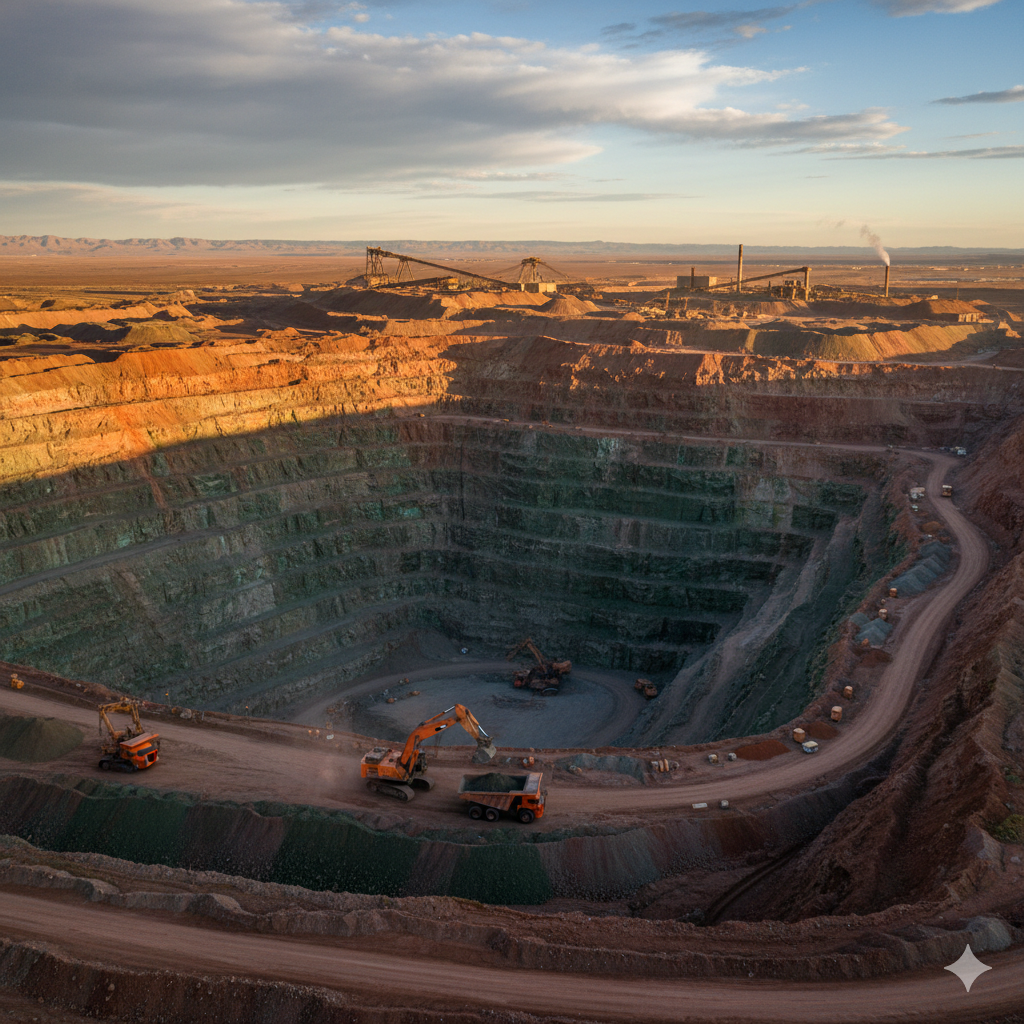
You can use copper to diversify your portfolio and position yourself for gains as the global economy electrifies, but you need to know which tools—physical metal, mining stocks, ETFs, or futures—match your time horizon and risk tolerance. Copper’s unique role in electrification and infrastructure makes it a strategic investment for investors who plan around multi-year demand growth.
This article Copper Investing breaks down the market drivers that move copper prices, the main ways to get exposure, and the practical risks and strategies you should weigh so you can decide whether copper deserves a place in your portfolio.
Market Drivers and Investment Opportunities
You will find long-term demand growth from electrification and constrained supply dynamics driving investment cases, while specific industries and investment vehicles determine risk and return profiles.
Global Demand Trends
Copper demand rises with electrification, grid upgrades, and urbanization. Forecasts from industry sources project rising annual copper demand through 2030–2050, driven by renewable generation, transmission lines, and expanding EV fleets.
Supply-side limits include declining ore grades, slower project approvals, and concentrated production in a few countries. These factors create potential price support if new mine capacity and recycling do not keep pace with demand.
You should monitor metal intensity per EV (kilograms per vehicle), utility transmission project pipelines, and regional policy targets for renewables. Those metrics signal near-term demand inflection points and potential price catalysts.
Key Industries Fueling Growth
Electric vehicles (EVs) and batteries use roughly 60–100 kg of copper per vehicle depending on drivetrain and charging infrastructure. Scaling EV production therefore directly increases copper consumption.
Power grids and renewable energy projects require large copper volumes for transformers, cabling, and substations. Grid modernization in North America, Europe, and China represents multi-decade demand.
Data centers and 5G/AI infrastructure boost copper demand for cooling, power delivery, and connectivity. You should track capex announcements from hyperscalers and telecom rollouts as short-to-medium-term demand indicators.
Types of Copper Investments
- Physical copper (coins, cathodes, warehoused metal): offers direct exposure but carries storage, insurance, and liquidity considerations.
- Exchange-traded funds (ETFs): provide convenient, liquid exposure; choose between physically backed ETFs and futures-based funds, noting roll costs for futures products.
- Mining equities (majors, juniors): offer leveraged upside to metal prices but add operational, permitting, and geopolitical risk. Look for quality assets with low sustaining costs and clear development timelines.
- Streaming/royalty companies: deliver cashflow-like exposure with lower operational risk, but depend on miners’ execution.
Assess each option against your time horizon, risk tolerance, and tax treatment. Use position sizing and diversification across instruments to manage concentrated sector risk.
Risks, Strategies, and Long-Term Outlook
Copper investing exposes you to supply shocks, policy and jurisdictional risks, changing demand from electrification, and company-level operational factors. You need practical tactics to manage price volatility, assess tradeoffs between miners vs. ETFs, and build diversification that fits your time horizon.
Volatility Factors and Price Influences
Copper prices react to macro cycles, industrial demand, and concentrated supply. Watch Chinese manufacturing data, EV and grid-electrification buildouts, and semiconductor demand because small percentage changes in those sectors can shift copper demand materially.
On the supply side, monitor production from Chile, Peru, and the DRC, plus project lead times and ore grades. Strikes, permitting delays, and export policy changes often tighten supply quickly. Inventory levels on exchanges and shipping congestion also amplify short-term moves.
Speculative flows and futures positioning can create rapid rallies or collapses. Interest rates and the US dollar influence commodities broadly; higher real rates tend to pressure copper. For timing, use both fundamentals (new mine capacity, mill throughput) and technical signals (volume, trend breaks) rather than relying on one input.
Risk-Reward Assessments
Decide whether you seek leveraged upside or steadier exposure. Individual miners offer high upside when copper rallies but add company risks: operational failures, cost overruns, political risk, and balance-sheet swings. Junior explorers carry exploration risk and dilution.
ETFs that hold producers or futures reduce single-company risk and provide liquidity. Streaming and royalty companies offer lower operational risk and more predictable cash flow but limit upside compared with pure-play producers. Physical copper exposure via futures or LME-linked funds matches price moves but requires active roll/contango management.
Quantify downside via scenario analysis: model price drops of 20–40% and stress-test miners’ cash flow and debt covenants. Incorporate ESG and permitting risk into valuation assumptions, since these can delay projects for years and impair projected supply response.
Portfolio Diversification Strategies
Blend instruments across risk profiles to control volatility. Example allocation: a core ETF position for market exposure (40–60%), selective large-cap miners for operational leverage (20–35%), and a small allocation to juniors or royalties for asymmetric upside (5–15%). Adjust weights for your risk tolerance and investment horizon.
Hedge political and jurisdictional concentration by selecting companies with diversified asset bases or by tilting toward countries with stable mining regimes. Use position sizing limits and stop-loss rules for single-stock exposures. Rebalance annually and monitor project timelines; prolonged delays should trigger reassessment.
Consider complementing copper with related sectors—renewable infrastructure, battery metals, and industrial cyclicals—to capture correlated demand trends while avoiding overconcentration in one commodity.