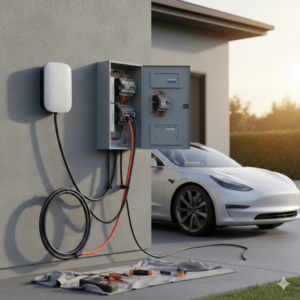

When you search “electrician near me,” you want a safe, licensed professional fast and on your schedule. Look for a nearby electrician who is licensed, insured, and experienced with the specific task you need—whether it’s a simple repair, a panel upgrade, or EV charger installation—so you get reliable work and clear pricing.
This article electricians near us shows how to identify qualified residential electricians, what services to expect, and how to compare estimates and credentials so you avoid common pitfalls. Use the guidance to find someone local who responds quickly, follows electrical code, and gives a written quote you can trust.
Residential Electrical Services
Expect safer circuits, brighter lighting, and a panel that matches your home’s power needs. Work focuses on code compliance, energy efficiency, and minimising disruption during repairs or upgrades.
Wiring and Rewiring
Faulty or outdated wiring creates shock and fire hazards. You should have knob-and-tube, aluminum, or degraded wiring inspected and replaced with modern copper conductors and updated insulation. A licensed electrician will trace circuits, test continuity and insulation resistance, and replace damaged runs while preserving finished surfaces when possible.
Rewiring often requires replacing old junction boxes and adding grounded outlets. Your electrician will label circuits on the panel and verify proper grounding and AFCI/GFCI protection where required by code. Expect permits and inspections for full-house projects; smaller targeted repairs may complete the same day.
Lighting Installation
Lighting choices affect safety, task performance, and energy costs. You can choose recessed cans, LED fixtures, chandeliers, under-cabinet lights, or exterior security lighting; an electrician ensures correct load calculations and proper mounting for each type.
Installation includes new or relocated switches, dimmers compatible with LED loads, and hookup to GFCI-protected circuits in kitchens, baths, and outdoors. For retrofits, your electrician will check ceiling joist access and may use crawlspace or attic routes to minimise drywall work. They will also balance circuits to avoid overloads and advise on fixtures that meet your lumen and color-temperature preferences.
Electrical Panel Upgrades
An undersized or failing panel limits capacity and increases risk. If you experience frequent breaker trips, have knob-and-tube wiring, or plan major appliances or EV chargers, upgrade to a modern panel with sufficient amperage and space for new breakers.
Upgrades involve replacing the service panel, installing new breakers, and bonding/grounding to current standards. Your electrician will coordinate with the utility if a larger service connection is needed, obtain permits, and schedule an inspection. They will label all circuits, install surge protection if requested, and test the system under load before leaving.
Choosing Qualified Professionals
Check licensing, proof of insurance, and specific trade credentials. Read recent customer feedback and confirm any service guarantees before scheduling work.
Certification and Licensing
You should confirm the electrician holds a current state or provincial license for the exact work you need. Licensing demonstrates the electrician passed required exams and met hours of supervised work; ask for the license number and verify it with your local regulator or electrical safety authority.
Insist on proof of insurance—both general liability and workers’ compensation. This protects you if equipment is damaged or a worker is injured on your property. For specialized systems (EV chargers, solar, commercial panels), ensure the technician has endorsed or additional certifications.
Write down the electrician’s license, insurance carrier, and policy numbers before starting. Keep copies of certificates in your project file.
Customer Reviews and Ratings
Look for recent, detailed reviews that mention similar jobs to yours—installation type, property type, and any issues resolved. Prioritize reviews that reference punctuality, communication, adherence to estimate, and code compliance.
Use multiple sources: local review sites, trade platforms, and the electrical authority’s complaint registry. Pay attention to patterns: one isolated bad review differs from repeated complaints about the same issue.
When a profile lists ratings, check the number of reviews behind an average score. Call past customers if possible, and ask direct questions about workmanship, cleanup, and whether extra charges appeared.
Service Guarantees
Ask whether the electrician offers a written warranty on parts and labor and how long that warranty lasts. Standard practices vary: parts are often covered by manufacturer warranties while labor guarantees commonly run 30–365 days—get these terms in writing.
Clarify what the guarantee covers: repairs, replacements, code corrections, and emergency callouts. Also confirm who handles third-party warranty claims and whether on-site troubleshooting after installation is chargeable.
Document the guarantee in your contract, including remedies and timelines for how quickly they will return to address issues. Keep contact details for warranty service readily available.